
These are not your father’s tacos. These are the tacos of revolution, the very apotheosis of a culinary uprising that seeks to ennoble and elevate the more traditional stalwarts of modern gastronomy through the ardent application of enhanced sourcing and technique, ultimately endeavoring to devise a new gustatory form wholly finer in function and flavor than its progenitor. Tacos as insurgency. Tacos as the proletarian pirate ship that finally commandeers haute cuisine.
But is this even possible? Can the taco, as we know it, be improved? And, if so, will the fixity of its archetypal form—two ingredients and the truth, yo—successfully bend to the machinations of culinary vagary and whim? Can the taco be made into something better, something finer?
The culinary brain-trust at Chicago’s Taqueria Chingon certainly think so. One look at their bios tells us why.

Chef-owner Oliver Poilevey has famously distinguished himself at Le Duc Bistro in Paris, and at Le Bouchon, as well, Chicago’s most beloved purveyor of Franco-centric fare. The pedigree of business partner and fellow chef-owner, Marcos Ascencio, is equally impressive: Chef de Cuisine at the Park Hyatt, and then at Bar Lupo, followed by a turn as Executive Chef at Chicago’s celebrated Ivy Room.
These are not the resumes of culinary aspirants, my friends. These are the c.v.’s of gastronomic gunslingers, loaded for bear, who are clearly capable of culinary incursion on formerly unassailable tried-and-trues like the American taco. They’re chefs with attitude. Chefs with swagger. Chefs with ideas like ready-to-fire six-guns, secreted inside their knife rolls.
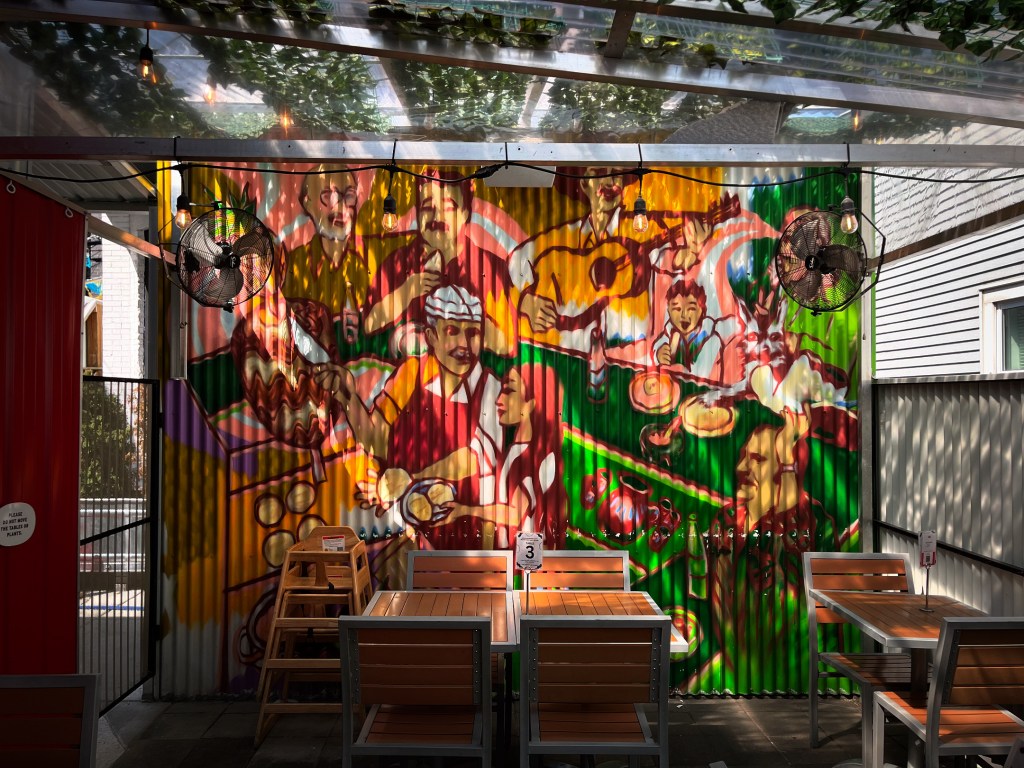
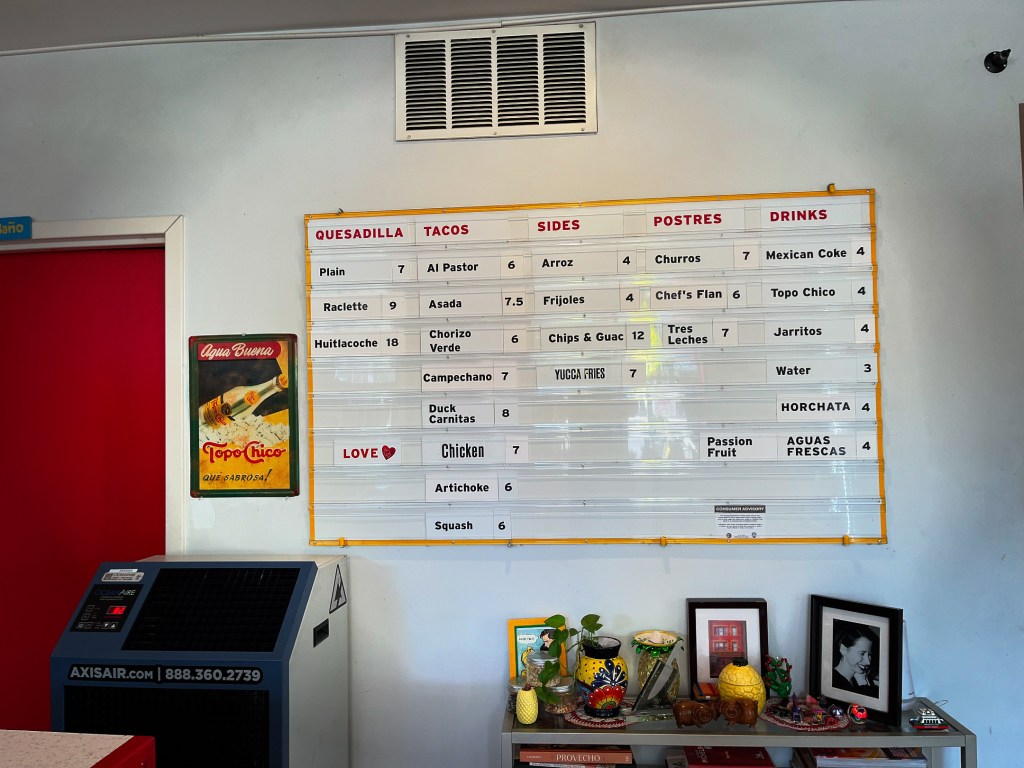
I visit Taqueria Chingon on a Tuesday, at eleven in the morning, to avoid lines for entry that routinely extend the length of a city block. At the counter, I order four tacos—duck carnitas; artichoke; summer squash; al pastor—and then sit outside, under awning, in a variegated sunlight that suffuses the dining area with the kind of otherworldly glow that every owner wishes for their restaurant, and which, here, this morning, happens naturally, courtesy of el sol.
This light is a harbinger of things to come.
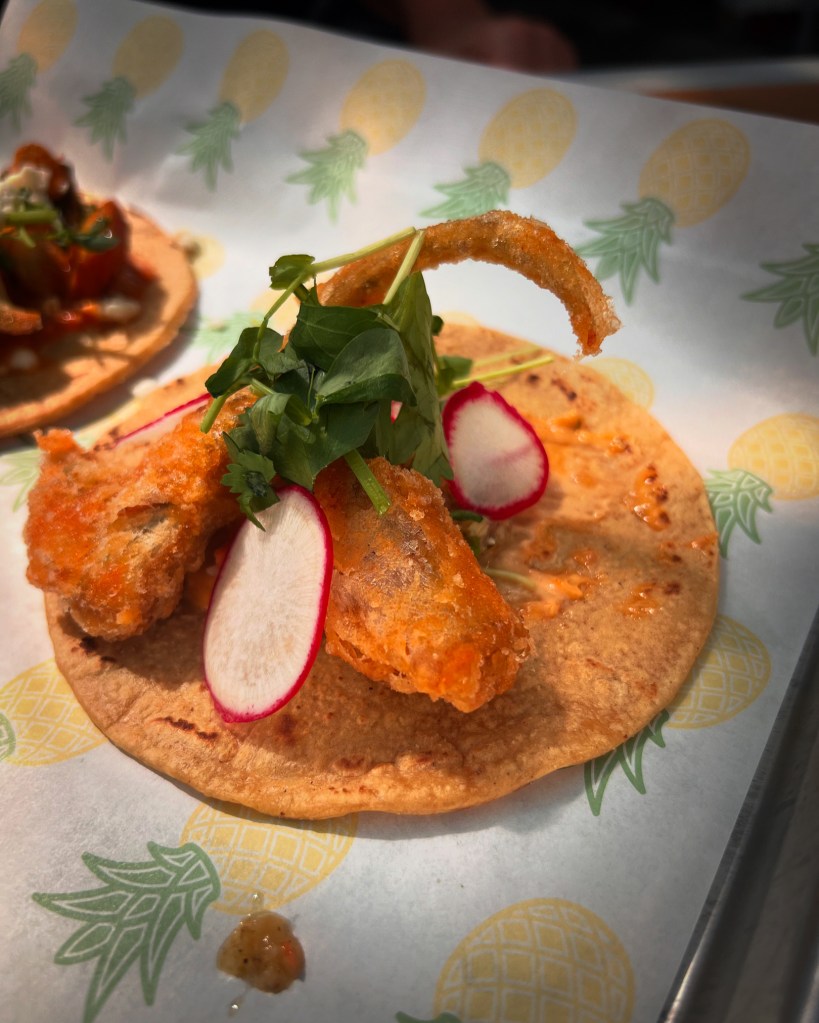
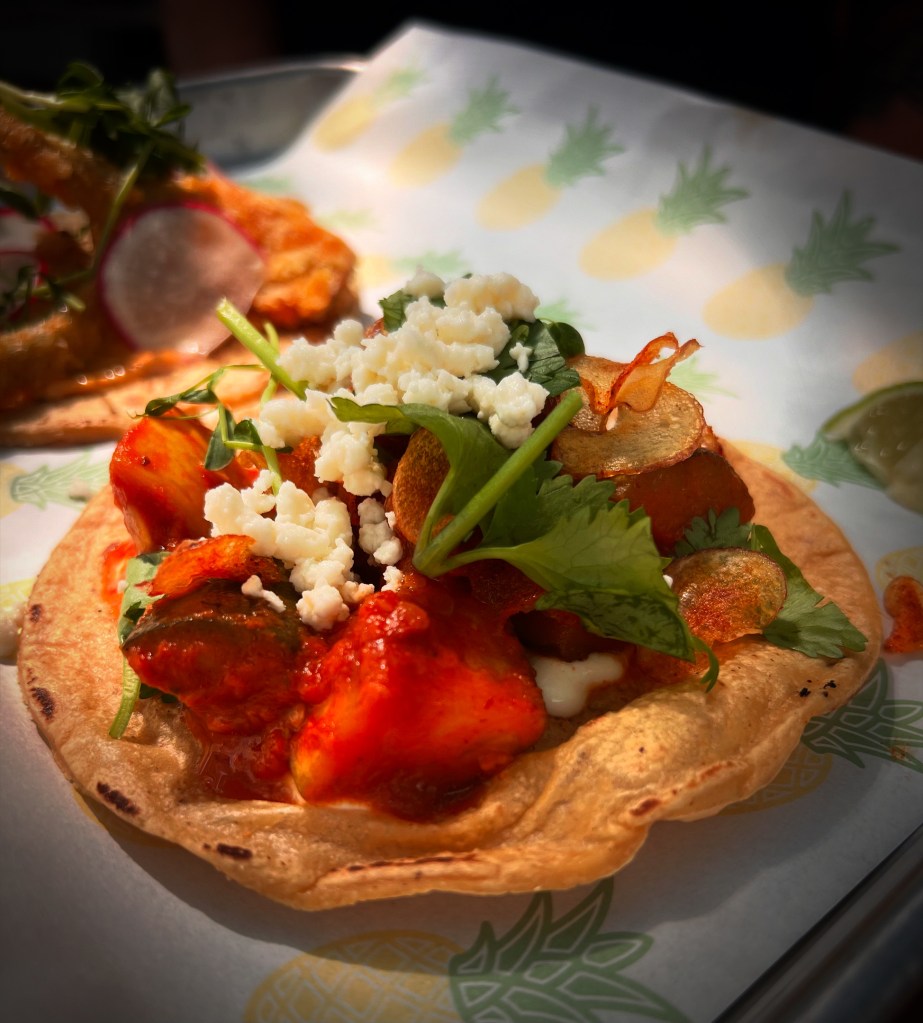
The tacos I soon receive are like nothing I’ve ever seen. Each tortilla is topped with ingredients kaleidoscopic in texture and color, and whose nod to haute cuisine is expressed in a meticulous verticality seen only on the fussiest of fine-dining plates. It’s a dazzling presentation, to be sure, but what’s more impressive is the savor—rich, piquant, sapid—that each of these tacos delivers with the precision of an assassin’s bullet, aimed to kill all culinary mediocrity on the plate.
As it does.
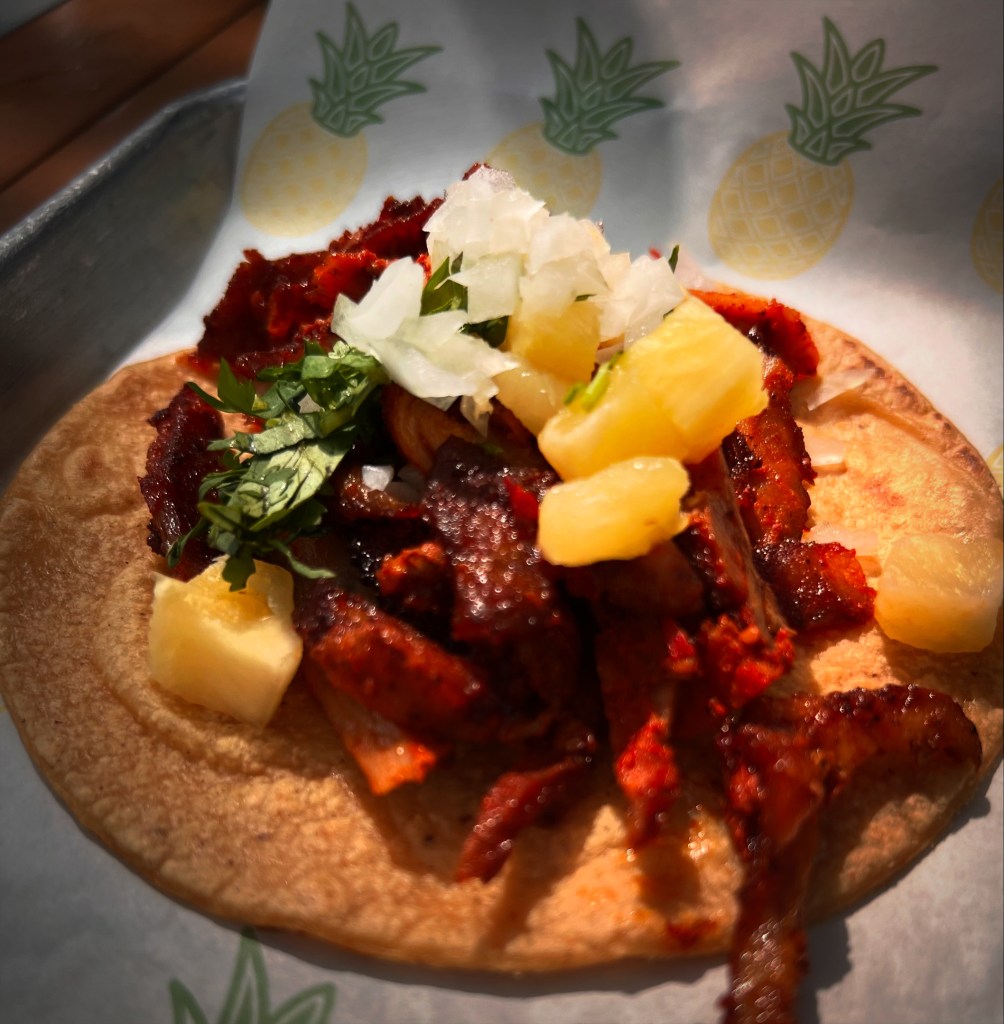
It’s a bullseye. A truly remarkable shot. Each of these tacos is more delicious than the last: the summer squash is both umami-dense and bright; the fry on the artichoke is delicate as Japanese tempura; the al pastor is a playful sweet-and-savory parry-and-thrust between pork and pineapple; the duck carnitas gleefully captures the interplay of fowl and fruit (oranges and date puree, in this case) afoot in its Chinese cousin and counterpart, Peking duck. Every taco on my plate is an achievement worthy of applause.
But is it too much? Is this coaction of ingredients too complicated for the simplicity of their form? Has the blues-like restraint of the traditional taco been befouled by the prog-rock syncopations of haute cuisine? And are the tacos of Taqueria Chingon an example of diminishing culinary returns, wherein a maximalist exchange of complexity overwhelms a form of food that otherwise thrives on simplicity?
Central to the mission of haute cuisine is the diminution of redundancy in the eater’s experience of a dish. That’s why, in haute cuisine, you don’t get large hunks of animal protein at the center of your plate. That would be too, too many bites of one texture and flavor. That would be redundancy. Haute cuisine endeavors to create an enlivened gustatory experience for the eater that surprises, and continues to surprise, with each successive bite.
I’m happy to report the tacos of Taqueria Chingon do just that. They present a radically modernist array of textures and flavors, atop a corn tortilla, in traditional taco form. But does this mean the tacos of Taqueria Chingon are better than those of, say, other, more traditional, neighborhood taco joints like Onions & Cilantro, or Birrieria Estilo Jalisco, located down the street, spitting distance from Taqueria Chingon’s front door, and offering tacos at a fraction of Chingon’s prices?
Maybe. Maybe not. That all depends on you.
Are you a taco purest, a believer in that orthodoxy which remands its practitioners to the codified consumption of tortilla and meat? Or are you a culinary modernist, a kind of taco heretic? Are you the variety of eater who wishes her tacos to push the outer limits of gastronomy with little concern for the time-honored tenants of taco making?

Me?
I’m both. I’m the kind of eater who seeks nirvana in two-ingredient tacos, sold on the side of a Mexican road. But I’m also kind of the eater who seeks ambition in his taco makers, and in them, too, hopes to find an inherent daring to challenge, even subvert, long-established culinary forms. Above all, I want my taco makers to be like Oliver and Marcos: boots on, guns out, ready to rumble, ready for revolution. Not for snobbery. Not for profit. Just because they fucking can.
For the constancy of their fearlessness alone, I will follow Oliver and Marcos wherever they go.
For now, I’ll be the guy, seated at his favorite table at Taqueria Chingon, devouring the artichoke taco on his plate, with red salsa smeared across his crumb-flecked chin.
Contact: christopher@proletariateats.com
 Propaganda by Proletariateats
Leave a comment