
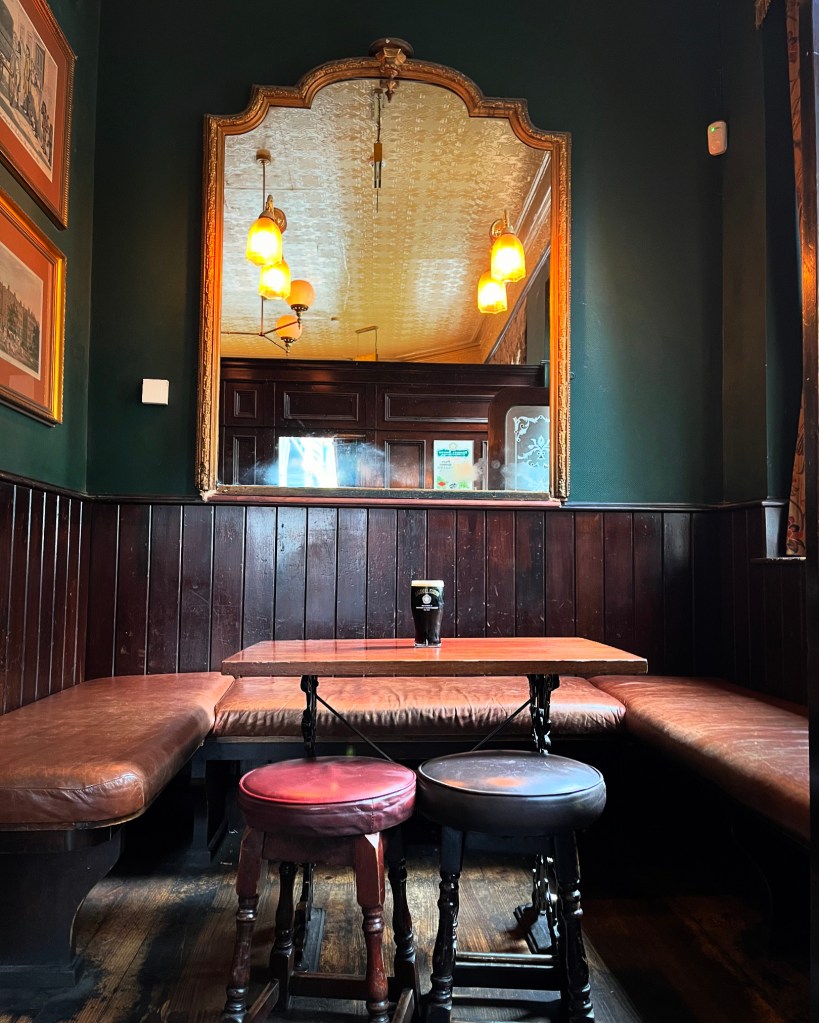
London might well be the best food city in the world right now. Don’t believe me? Visit any of its high temples of gastronomy—St. John, or Trivet, or Bouchon Racine—and you’ll immediately see why its culinarians are revered as the vanguard of modern cuisine, and why its kitchens are rightly celebrated as bastions of culinary ingenuity and innovation.
Which is fucking hilarious. Because twenty years ago, a declaration like that would have been unthinkable, as nothing at that time could have been further from the truth. Twenty years ago, London was the laughing stock of gastronomy, the inevitable punch-line in a never-ending joke about which city boasted the world’s worst food.
And deservedly so.
Back in the bad old days, London’s contributions to gastronomy were comically poor. Kitchens were either offering up strange-sounding dishes—Spotted Dick; Bubble and Squeak; Toad in the Hole—or dishes that were verifiably strange, like the city’s infamous Jacket Potato, which consists of a single, unseasoned, baked potato, doused with Heinz beans, and served, lukewarm, sans contrition, for its gag-inducing awfulness.
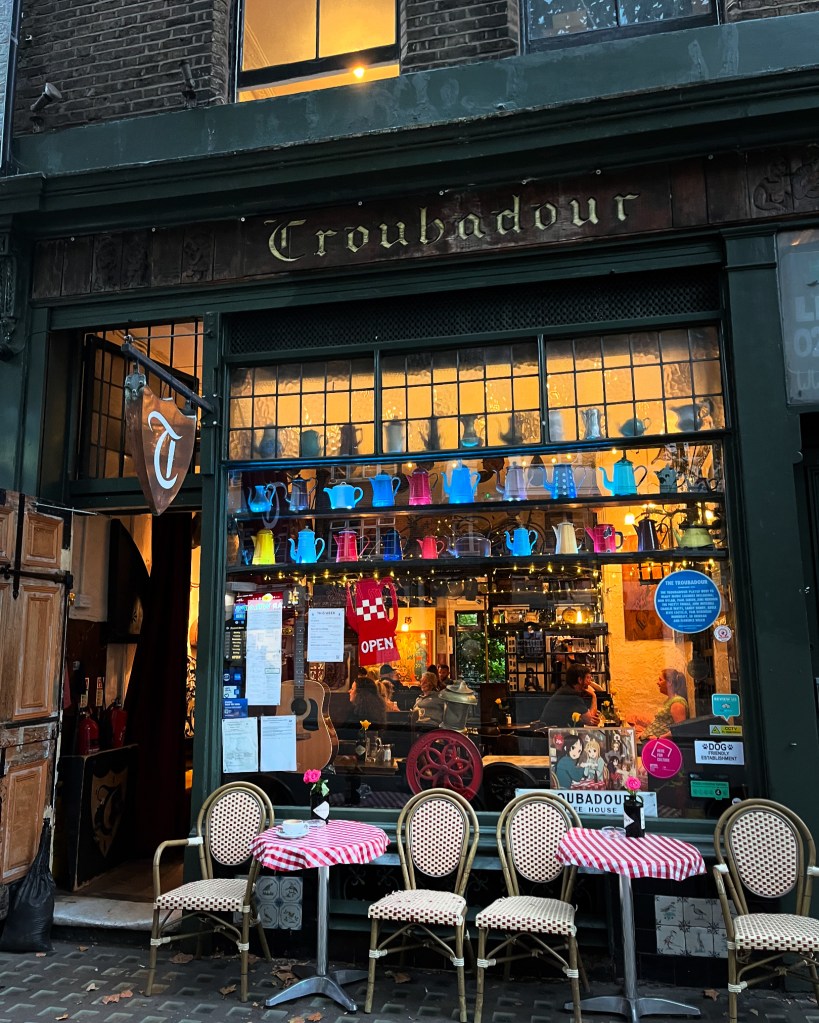
These were dark ages for London food, and I remember them well. Because I was there. Twenty-eight years ago, I was a student at the University of Oxford’s Keble College, and I would visit London every weekend, seeking culinary pleasure in its chestnut-scented streets. Nothing doing, bro. I would find only misery in the ubiquity of its tinned meat-pies, or in its revolting canned fish packed in aspic, or in its Doner kebobs made from meat of origins unknown. The London of 1996 was a culinary hellscape from which no amount of money could buy reprieve. Bad food occupied nearly every station on the high-low spectrum, even at many of London’s high-end restaurants of the day, where throwing money at a meal was hardly a guarantee of gustatory success.
London is different now. By different I mean completely changed. Today, London is a culinary Brigadoon, a scintillating wonderland of gustatory delights, where eaters like me convene from across the world to have our minds blown by the truly astonishing bites of nouvelle cuisine we now find at the end of our forks.
Which is both enthralling and liberating. Because the certain knowledge of London’s present greatness allows food-romantics like me the freedom to looking back at the city’s culinary past. It allows us to reconsider and critically revaluate those traditional British foodstuffs for which London was once so infamous.
So that’s what I did. Last week, I visited London on a two-day layover. Two days dedicated to eating, drinking, and seeing what makes culinary London tick. Day One would offer a strictly forward-looking aperture into London’s most celebrated kitchens. I would visit restaurants like those I’ve just mentioned—St. John; Trivet—talking to their chefs, and observing those kitchens that have rightly solidified London’s reputation as the destination for food tourism.
Day Two would be different. Very. Day Two would offer a decidedly backward look at the culinary London of yore: three meals—breakfast, lunch, and dinner—made from three of London’s most iconic dishes, eaten in restaurants across the city that I’d chosen, randomly, on impulse, as I walked by.
But first, coffee.
Coffee – Bar Italia – Soho
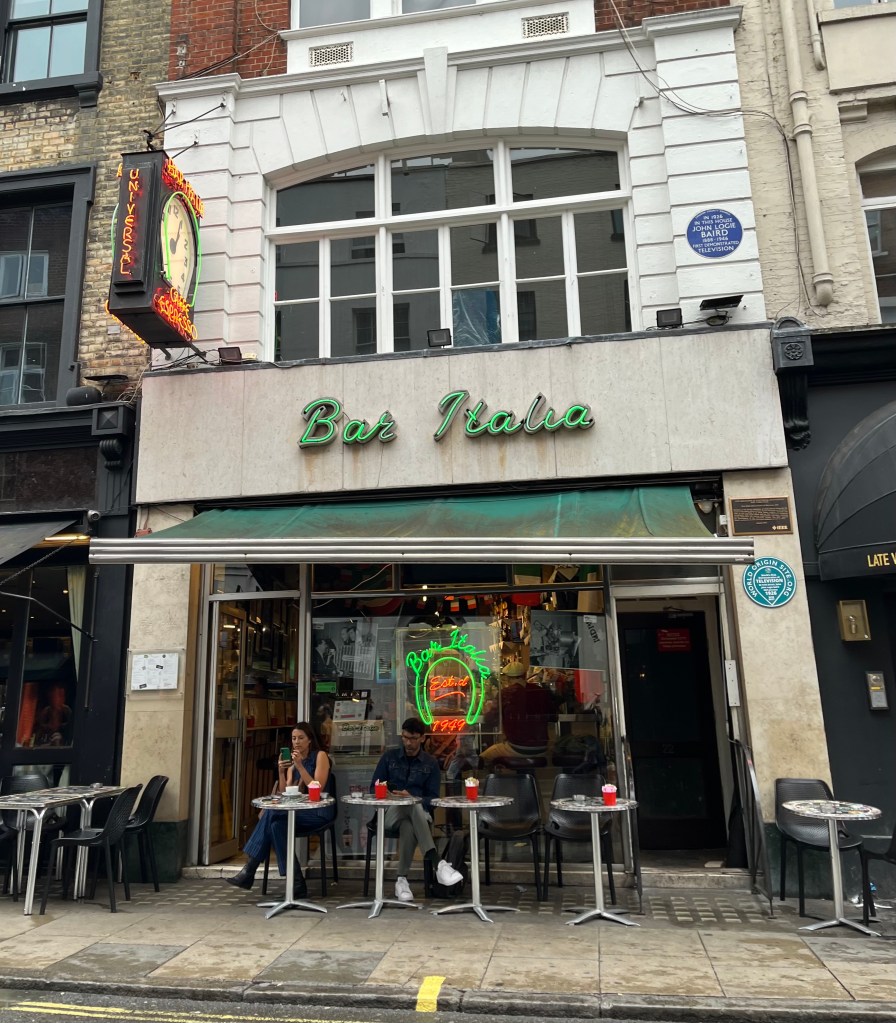
Don’t be fooled by talk about Britian’s obsession with tea: London is a two-fisted coffee town, teeming with world-class coffee shops that support a vibrant coffee culture. For my morning brew, I ventured to Bar Italia, in London’s Soho, and there have the kind of joe that makes coffee lovers like me want to climb the nearest balcony and sing from Verdi’s Rigoletto. That’s how good the coffee at Bar Italia is: rich, aromatic, producing a euphoria in the drinker that inclines her to belt arias at the top of her lungs. Drink London tea, sure, but for the love of God, drink its coffee. Please.
Breakfast – Franx Continental Café – Covent Garden
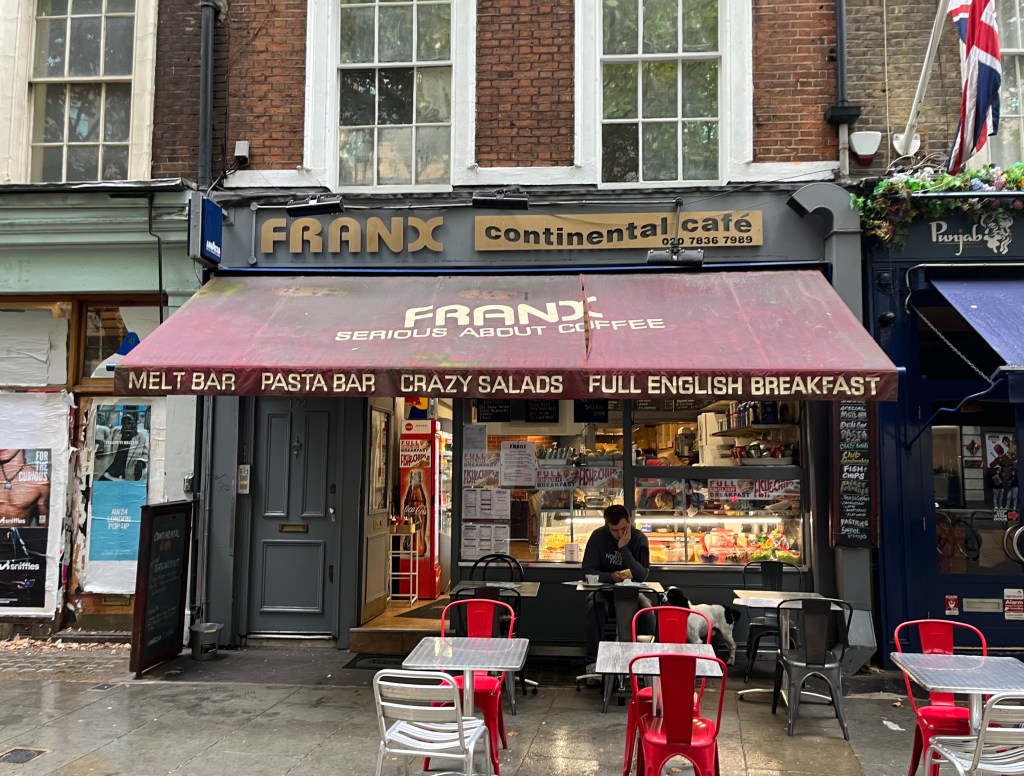
They call it a “full breakfast” here, this hodgepodge of culinary non sequiturs on a plate: eggs, beans, tomatoes, mushrooms, sausage, bacon (back bacon, called rashers here, culled not from the pig’s belly, but from its loin) and toast, all crammed together like a seven-car pile-up on the M4. The plate looks like a child’s fingerpainting, colors and textures put together without apparent rhyme or reason.
Or so I thought.
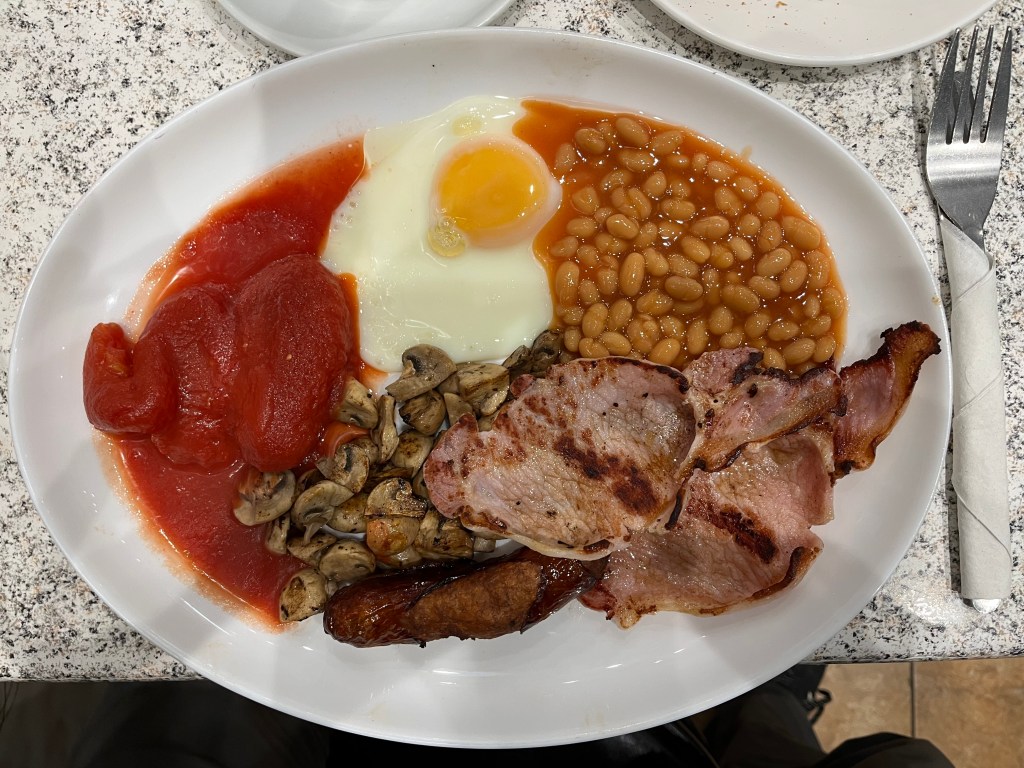
Because as I tuck into this most traditional English breakfast, I now begin to understand the delicate interplay of culinary equipoise afoot among its components: how the creaminess of egg is perfectly offset by the umami-rich mushrooms and tomatoes; how the sweetness of the beans is offset by the saltiness of bacon, and how the deep unctuousness of sausage coalesces the whole, cacophonous mess into something unified, whole, and wholly sublime.
It’s best to think of the Full Breakfast as the U2 of gastronomic endeavors: while each ingredient seems weak on its own—the way Bono strains for pitch; the way the Edge often struggles to construct a compelling guitar solo—the whole of its parts produces a greatness that’s difficult to dispute, and almost to impossible define.
Lunch – The Pie Man – Foodtruck– Brompton
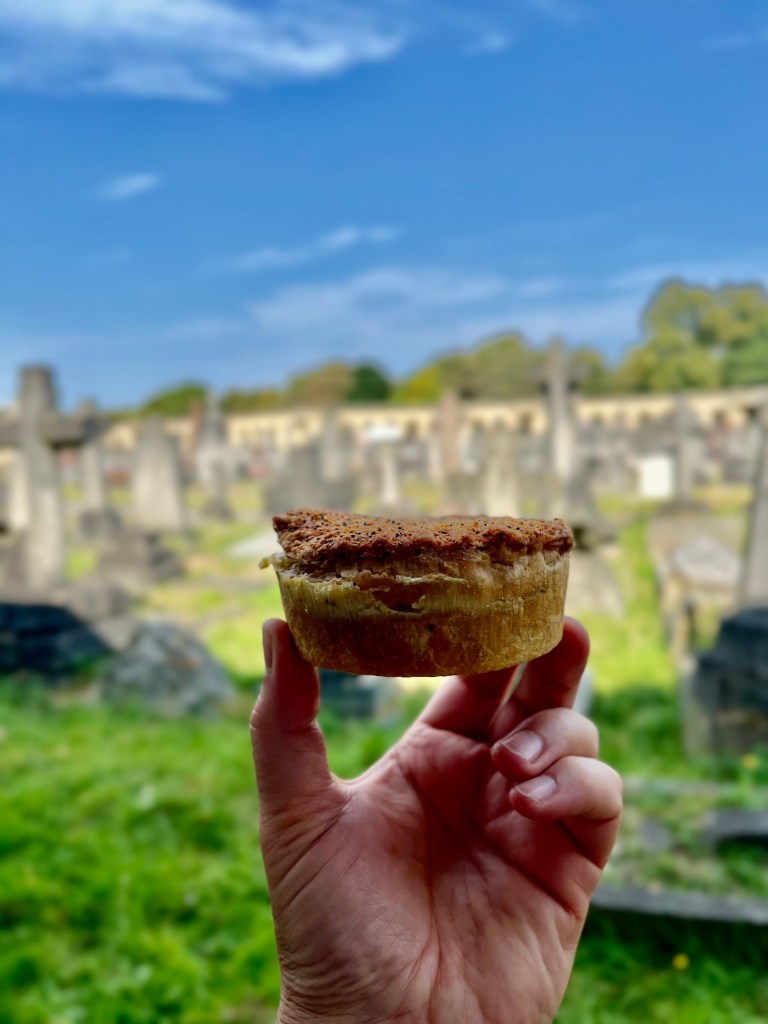
Pies are to English cuisine what hamburgers are to American eating: hand-held delivery devices of savoriness; fixtures and stalwarts of working people, eating on the run. The pie from which I make my lunch is from a food truck located, this day, in Brompton Cemetery. It’s the size of a hockey puck, this pie, heavy as a boat anchor, and filled with the most British ingredients one might imagine: potatoes, leeks, and cheddar cheese. All of this encased in a crust so buttery as to have me crushing Lipitor between my molars, later, for dessert.
I used to loathe these things. I used to consider the London savory pie as a culinary lead balloon. But holy shit, are these are good. Now, with this eating, I understand them to be one of London’s greatest inventions: a gastronomic hand-grenade unrivaled in its ability to kill hunger, whose deliciousness is manifold in its greatness. This pie, my pie, one of the most astonishingly things I’ve recently put in my mouth, and eating it, as I now am, among the moldering graves of Brompton Cemetery, must surely be a “peak London” experience. It’s a stroke of fortune almost too great to comprehend, this pie in this place, and I lick butter residue from my fingers as the roar of nearby Chelsea football stadium shakes the sarcophagus-choked ground around me.
What greatness.
Dinner – The King’s Head – Earl’s Court
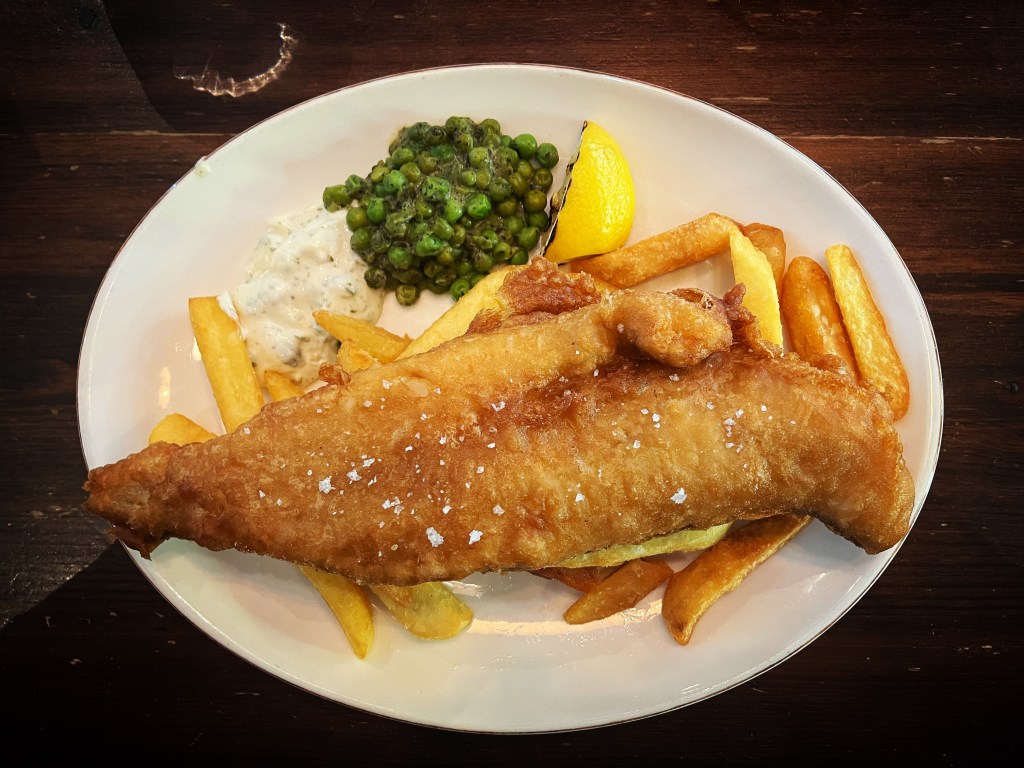
What dish is more emblematic to British cuisine than Fish and Chips? What food is more elemental to the British national character than fresh cod, dipped in batter, fried in beef tallow, and then soaked in malt vinegar? If London were a dish, it would be Fish and Chips. I mean, dude, you might as well be putting the Union Jack on a plate.
Believed to have been introduced to England by the Chuts (Spanish and Portuguese-Jewish immigrants) in the 1850s, Fish and Chips quickly gained the kind of panoptic popularity enjoyed only by a national dish. Nowadays, chip shops, or chippies as they’re known, are a fixture at every street corner in London.
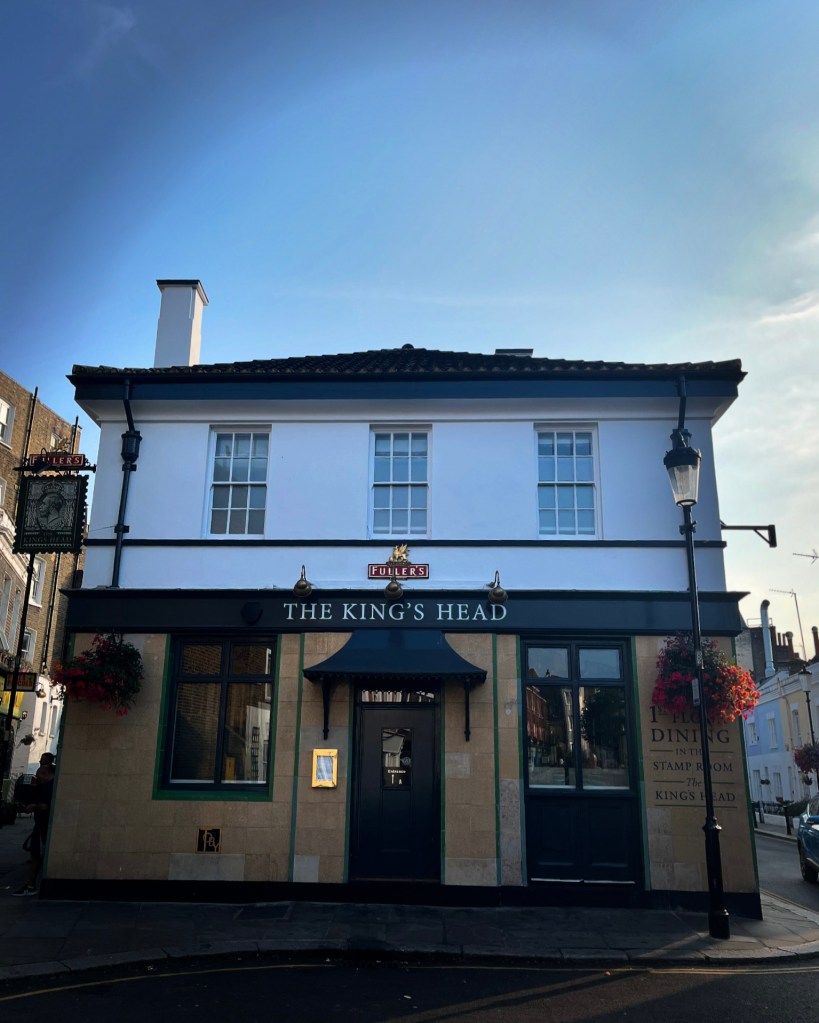
For my dinner, I visit the King’s Head in London’s Earls Court. There I am served a filet of perfectly fried fish that’s as big as my forearm. Beneath the filet, a pile of obligatory chips and side of minted peas, whose gustatory brightness shines through the cod’s deep-fried mouth-feel and murk like a ray of sudden sunshine that’s emanating from my plate. All of this I douse with enough Sarson’s malted vinegar to float my fries like punts on the river Thames. It’s all mind-bendingly delicious.
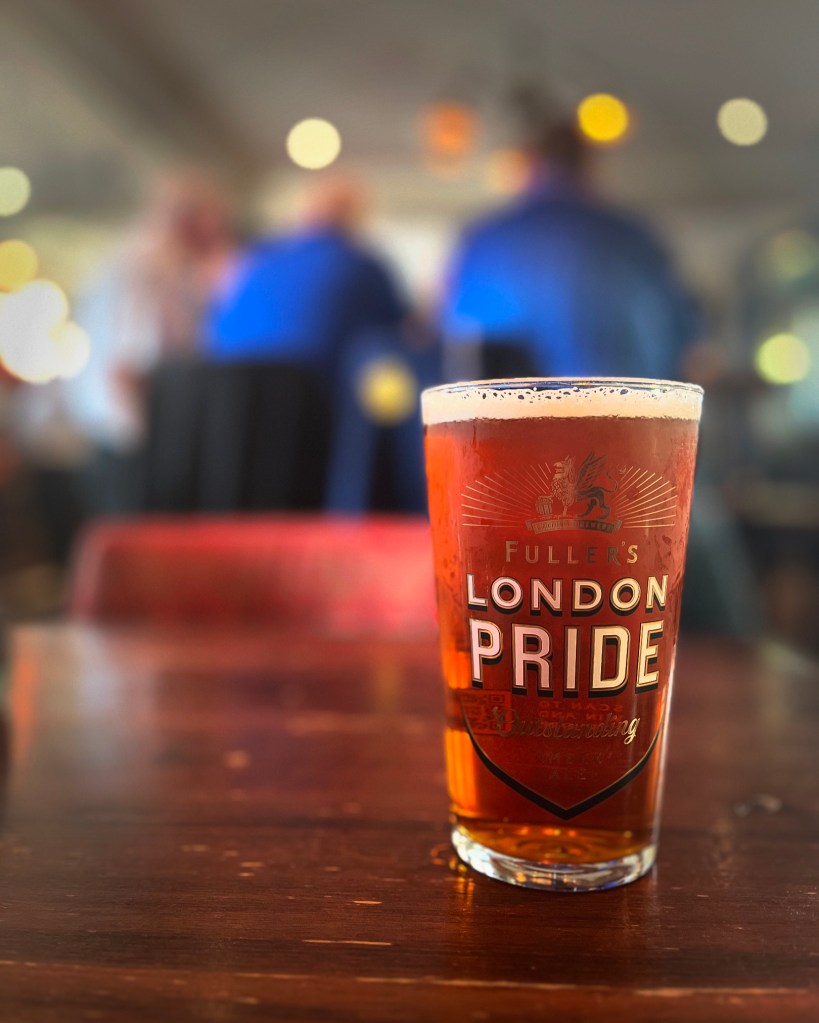
Washing this down are several, successive pints of London Pride, a one of those low-ABV (4.1%) amber ales at which the Brits are so good. It’s a cask ale, meaning it’s hand-drawn by the bartender, and not propelled into your glass by kegged CO2. The result is a pint that tastes delightfully flat to the American palate, and one you can drink all day long while copping a nice buzz, but never feeling drunk.
And that’s what I do. I sit and drink my London Pride, hour after hour, watching the Chelsea football fans drink, and thinking about what I’ve just eaten at the King’s Head, and throughout the day. As I do, I can’t help but wonder: did I fail to understand British food when I was a student here? Was British food really that bad, or was I just bad at eating it? Had my nascent palate failed to comprehend the sublimities afoot in British cuisine? And if so, had that failure sabotaged my ability to judge that which had always been delicious? Was my erstwhile loathing of British food simply a case of user error?
Twenty-eight years ago, I’d pegged the food of London as hackneyed fare for simpletons and rubes. Food that lacked all imagination. Food that categorically sucked. But after today, after making my way through three of London’s greatest dishes, I know now, wholly and unequivocally, that eat of these British classics is suffused with utter greatness.
That’s because the food I’ve eaten today does far more than sate hunger: it envelops its eater in the warm hug of gustatory delight, that nurturing culinary embrace, evoking a time in their lives when skies were sunny, and nothing ever hurt. This food is a warm bath for the soul.
Classics are classics for a reason. I understand this now—that Full Breakfast and Fish and Chips are, indeed, ferociously righteous dishes—because I also understand that in today’s London, these are not my only options. I now know there’s an entire world of nouvelle cuisine in greater London, just waiting to be discovered. Being free, now, from the tyranny of old-world gastronomy allows me to admit that and cop to my former shortcomings as an eater.
So go, friends, and revel in the London’s most traditional dishes on their own terms—the dietary schizophrenia of the Full Breakfast; the caloric density of the savory, lunch pie—and understand how truly amazing each of these dishes can be.
Because that’s what I’ll be doing, again and again, every time I return to this amazing place.
London rules, yo.
See you there.
Contact: christopher@proletariateats.com


Leave a Reply